Latest News
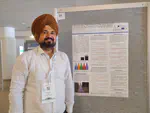
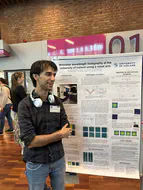
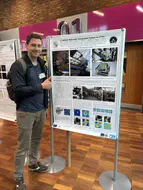
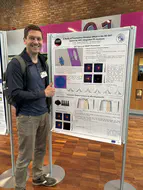
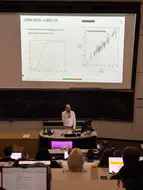
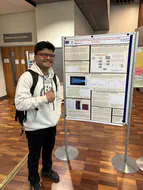
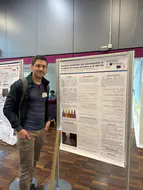
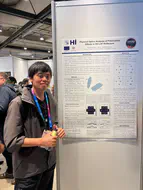
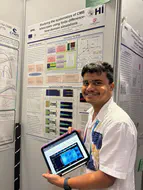
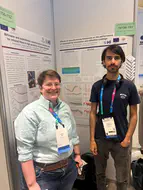
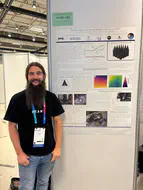
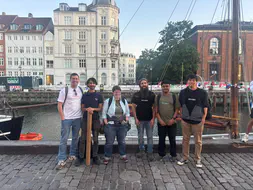
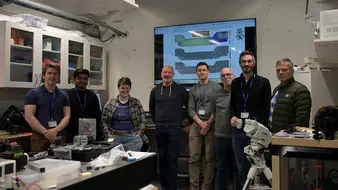
Six lab members attended SPIE Astronomical Telescope and Instrumentation that took place in Copenhagen in early July. Our group members presented six posters at the conference.
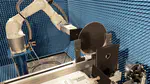
Members of the research group have been working on a paper the describes the development of microwave absorbers. The paper, led by Dr. Gaganpreet Singh, combines aspects of material design, measurement, and state-of-the art simulations run on High Performance Computing resources availabe to the group through Stockholm University. The paper was published in Applied Optics as Editor’s pick and is available on the arXiv as well.



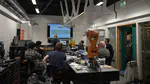
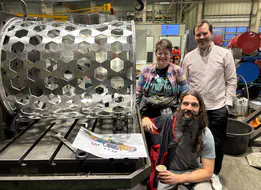
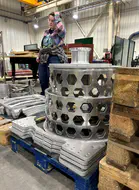
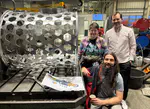
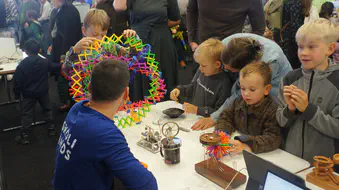
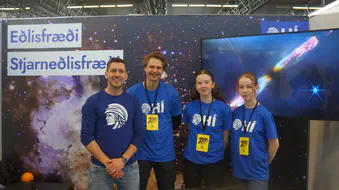
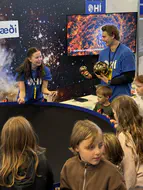
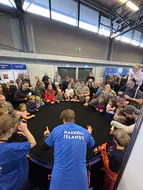
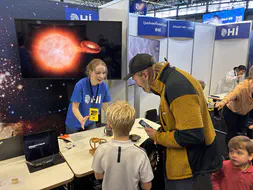
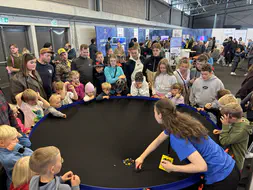
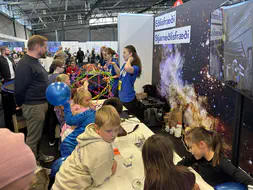
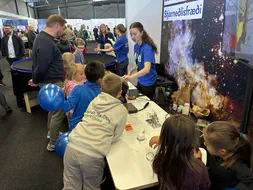
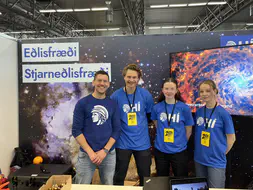
Members of the CMBeam team participated in Vísindavaka 2025, an annual science outreach event which is meant to inspire young people. This time, our booth was equipped with a 2.4-m diameter gravity demonstrator, some videos (in Icelandic) on various astrophysics activities at the University of Iceland, a Hoberman sphere, a few perpetual motion machines and Stirling engines, diffraction gratings, lasers, and calcite crystals.
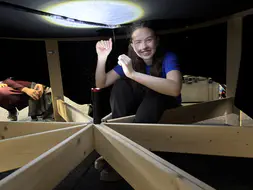
We upgraded our gravity simulator from last year, going from 1.5 to 2.4-m diameter which allowed for a lot of new demonstrations. We were particularly happy with simulations of solar system formations which we could perform by giving every child 2-3 marbles and having half of them throwin clockwise and the other half counter-clockwise. After a bunch of collisions, only a few marbles would remain in orbit around the central mass and they were typically all going in the same direction!
We did have a slight scare early in the day: A tear appeared in the seam of the fabric near the center of the sheet. We literally had a tear in the fabric of spacetime… Thankfully Katrin Hekla was able to solve the problem since we had brought a thread and needle just in case :)